
Rebuilding After Loss
After my husband walked out, silence filled our house, heavy and unbearable. Every empty corner whispered memories of what once was. For months, I drifted through that quiet until one morning on the porch, I looked at my lifeless yard and thought: This, at least, I can fix. It became my healing project.
I studied soil types, watering schedules, and mowing patterns until the grass glowed soft and emerald beneath my feet. When the mail carrier said, “Best lawn on the block, Ms. Brooks,” I almost cried. It wasn’t just a compliment—it was proof I could nurture something beautiful again.
A Neighborly Challenge
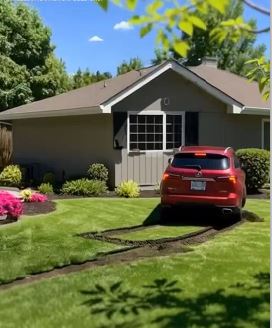
Then Denise moved in next door. She was newly divorced too, but unlike my quiet rebuilding, she blasted music, drove a flashy SUV, and hosted loud, wine-fueled nights that seeped into my sleep. At first, I tried to ignore her. Then came the tire marks—faint at first, then bold—cutting straight across the lawn I had cared for like a wounded thing.
When I confronted her, she smirked. “It’s just grass,” she said. The words pierced like a thorn. I tried garden stakes, polite signs, decorative stones. She destroyed them all, rolling over my work with blatant arrogance.
Taking a Stand
The final straw came after a rainstorm when she carved muddy trenches through my yard and waved at my window, daring me to react. I called the police. They issued a warning, but she only smiled. So I built a border of cinder blocks—ugly, solid, immovable. The message landed. Other neighbors followed suit. By week’s end, her shortcut was gone. She accused me of turning the block against her, but I only said, “You did that yourself.” For the first time in a long while, I felt powerful again.
Finding Peace
Months later, she came over—no smirk this time, just regret. “I was angry,” she admitted. “At life. At everything. I’m sorry.” I accepted. We never became close, but we found peace. The cinder blocks stayed, now painted white with marigolds between them—a border, not a barrier. My lawn thrived, greener than ever, and so did I.
I realized boundaries aren’t about keeping people out; they protect the parts of yourself you’ve rebuilt. The grass wasn’t just grass—it symbolized respect, growth, and proof that even after being trampled, life can bounce back stronger than before.