
Chapter 1: The midnight Ultimatum
The call came at 2:17 a.m., piercing the silence of my Denver apartment like a jagged shard of glass.
I was deep in a dreamless sleep, the kind of exhaustion only a structural engineer knows after a sixty-hour week ensuring high-rises don’t collapse under their own weight. My phone, charging on the nightstand, lit up the room with an aggressive, strobe-like flashing. The name on the screen—Mom—pulsed with an urgency that instantly spiked my cortisol levels.
Promoted Content
I fumbled for the device, my eyes adjusting to the harsh glare. Before I could even mutter a groggy “hello,” the screaming began.
“Logan! Oh God, Logan!”
My mother was hyperventilating, her voice ragged and wet with tears. “Tanner is in the hospital. Right now. It’s bad, Logan. It’s so bad.”
Behind her, I heard the distinct, chaotic beep of medical machinery and the low murmur of urgent voices. Then, the phone was ripped away. My father’s voice, usually stoic and reserved, cracked with a panic bordering on madness.
“Listen to me carefully,” he commanded, though his breath was hitching. “Your brother is in agony. He’s at Barton Memorial. They won’t give him the strong pain meds or take him back for surgery until we put down a cash deposit. We need $15,000 immediately, Logan. Wire it now, or he’ll be stuck in this hallway screaming all night.”
I sat up, the duvet falling from my shoulders, the chill of the Colorado night hitting my skin. I blinked, trying to process the demand. Fifteen thousand dollars. At 2:00 a.m.
“Why can’t you pay it?” I asked, my voice surprisingly steady, a flat line amidst their hysteria.
Dead air. The silence stretched for three agonizing seconds before my mother snatched the phone back, her voice raising an octave. “We’re tapped out, baby! We gave him everything we had for the trip. We thought he was just having fun! You’ve always been the strong one. You’re the only one who can fix this!”
The strong one. The code word for “the solvent one.” The one who sacrifices.
I looked at the glowing numbers on my alarm clock. 2:19 a.m. Something inside me, a structural beam that had been bearing too much load for three decades, finally snapped. It wasn’t a loud explosion; it was a quiet, catastrophic failure. The bridge had collapsed.
“Call your perfect little princess,” I said calmly.
“What? Logan, you can’t—”
I didn’t let her finish. I tapped the red icon, ending the call. Then, with a methodical precision I usually reserved for reviewing blueprints, I yanked the charger cord from the wall, powered the phone completely down, and tossed it onto the rug.
My heart was hammering against my ribs, a frantic drumbeat in the dark, but my mind was eerily silent. I lay back down, pulled the covers up to my chin, and stared at the ceiling shadows. I expected guilt—the old, familiar heavy blanket that had suffocated me for years. But it didn’t come. Instead, I felt a strange, terrifying weightlessness.
I closed my eyes and went back to sleep.
Chapter 2: The Architecture of Obligation
To understand why I hung up, you have to understand the hierarchy of the Hayes family.
I am Logan Hayes, 32 years old, a structural engineer living in Denver. I deal in loads, tension, and yield points. I know exactly how much pressure a column can take before it buckles. For my entire life, I was the column holding up the roof of a house in North Las Vegas.
My parents, Steve and Nancy, raised me with a single commandment: The oldest sacrifices for the younger. Specifically, for the younger brother.
Tanner Hayes, 26, was the Golden Child. From the moment he drew breath, he was the undisputed emperor of our household. He could do no wrong. If he failed a test, it was the teacher’s fault. If he crashed a car, the road was icy.
Then there was Skyler, 23. The Baby. The Princess. Sweet, manipulative, and allergic to accountability. She learned early that batting her eyelashes was a valid form of currency.
And me? I was the ATM.
When I was 22, fresh out of engineering school, I moved back home to save money. Instead, I worked three jobs—construction site management by day, bartending by night, and CAD freelancing on weekends—to pay Tanner’s tuition at UNLV.
I remember the day I wired the money: $28,000. It was every cent I had saved. I did it because Mom cried and said Tanner needed a “fresh start.” A year later, he dropped out because “academic life wasn’t his vibe.” Mom hugged him and said boys will be boys. Dad took him to a Raiders game to cheer him up. Not one person mentioned the $28,000. It vanished into the ether of Tanner’s mediocrity.
Three years later, Skyler graduated high school. Mom called me, weeping happy tears. “She deserves something special, Logan.”
Two weeks later, I was in a dealership co-signing for a white Jeep Wrangler Rubicon. A 48-month loan, $480 a month, deducted automatically from my paycheck. Skyler sent me a text: Thx sis! <3 and immediately posted a photo on Instagram captioned #BigSisGoals.
I started keeping a spreadsheet. It was a masochistic habit, but I needed to see the data. Tuition. The Jeep. Credit card bailouts. “Emergency” cash for rent when Tanner got fired. Bailouts for Skyler’s “content creation” wardrobe.
The total sat in cell G45, bolded in red: $120,450.
When I finally moved to Denver at 24, I thought the distance would save me. It didn’t. The requests just digitized. Venmo. Zelle. CashApp. The guilt traveled at the speed of light. I paid because I wanted them to love me. I paid because I thought that if I bought enough of their affection, eventually I would be worth something more than a check.
But that Saturday morning, as sunlight flooded my hardwood floors, I realized the truth. They didn’t see me as a daughter. They saw me as a resource. And resources eventually run dry.
I made French press coffee. I took a forty-minute shower. I watered my monstera. I ate yogurt with granola. I did not turn my phone on until 10:00 a.m.
When the screen finally flared to life, it wasn’t a phone anymore; it was a grenade.
61 Missed Calls.
147 Text Messages.
Voicemails stacked three pages deep.
The text preview from my mother chilled my blood: He’s vomiting blood. You’re killing your brother. I never thought I’d raise a monster.
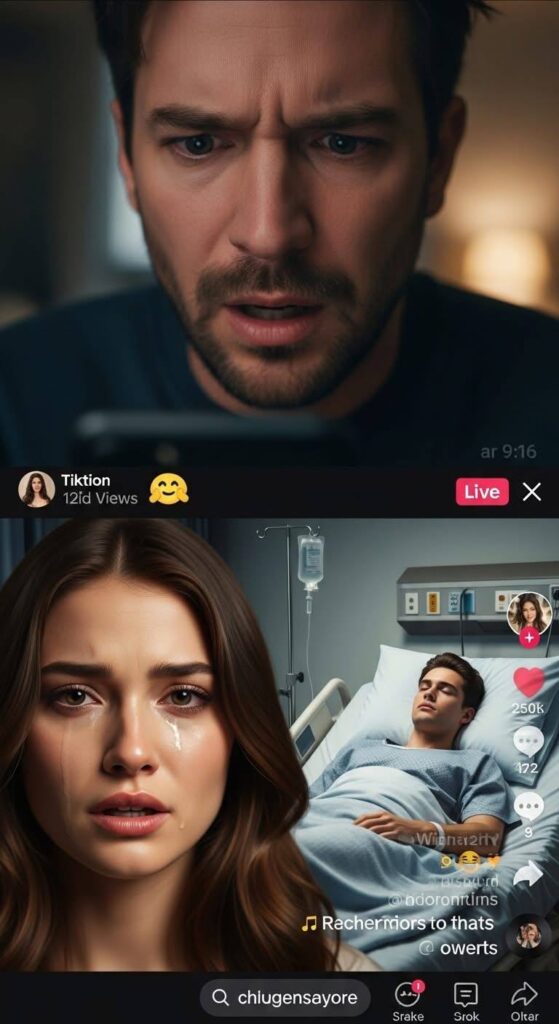
But it was the notification from TikTok that made my stomach drop. Skyler had posted a video. It had 1.2 million views.
Chapter 3: The Billionaire Fantasy
Two months ago, the madness began in a group chat.
Tanner had announced he needed a “mental reset” weekend in Lake Tahoe with his best friend, Garrett Quinn. Garrett was the son of a prominent Las Vegas developer—real money. Tanner claimed it was a modest trip, just four days at Harrah’s, and that Mom and Dad had covered the flights.
Skyler immediately chimed in that she was tagging along. Don’t worry big sis, she had texted, I’m riding with Garrett. Zero cost to the family fund.
I found out that was a lie the same way everyone else did: Instagram Stories.
Thursday morning, Skyler posted a photo posing in front of a private terminal at Harry Reid International. She was holding a brand new Louis Vuitton Capucines bag—retail price $6,000. The caption read: Thank you Mommy & Daddy for the best life!
I screenshotted it and sent it to my mother. ?
Mom replied instantly: We only gave Tanner $3,000 for gambling, sweetie. Skyler said Garrett is helping her.
I knew it was a lie, but I was tired. I let it go.
By the time they landed in Reno and took the limousine to South Lake Tahoe, their social media feed had turned into a simulation of billionaire excess.
There were videos of them checking into a two-bedroom suite with floor-to-ceiling windows overlooking the sapphire water of the lake. Tanner filmed himself throwing $100 chips onto a craps table like confetti. Garrett posted boomerangs of Dom Pérignon bottles popping on the balcony.
On Friday, they rented a 50-foot yacht for a cruise around Emerald Bay. Skyler’s TikTok of her dancing on the bow went viral. In the background, Tanner and Garrett were throwing cash into the wind for “aesthetic.”
Saturday afternoon, Tanner FaceTimed me from the casino floor. He was drunk, cheeks flushed, eyes glassy.
“Look where we are, Lo!” he shouted over the din of slot machines. “VIP section! Bottle service! Garrett’s dad put it all on the Black Card. We’re untouchable!”
“How much is the table?” I asked, my engineer brain doing the math.
“Don’t worry about it!” He laughed. “Hey, serious talk… thanks for always having our backs. This one is on us.”
I stared at the screen. $3,000 from my parents? The math wasn’t mathing. A private jet. A yacht. A suite at Harrah’s. High-limit tables. This was a $50,000 weekend, easy.
If Garrett was paying, fine. But the dread in my stomach told me otherwise.
Now, sitting in my Denver apartment on Sunday morning, watching Skyler’s tear-streaked face on TikTok, the pieces slammed together.
In the video, Skyler was standing in a hospital corridor. “My 26-year-old brother is fighting for his life right now,” she sobbed, mascara running down her cheeks. “And my own sister—who makes six figures—is refusing to send $5,000 to save him. She’s letting him suffer. Please share this.”
She tagged my full name. My employer. My city.
The comments were a cesspool.
Hope you rot in hell, Logan.
Rich people are disgusting.
Where does she work? Let’s find her.
My phone buzzed again. An unknown number from Nevada.
I stared at it. This wasn’t family. This was official. I took a breath, steeled my nerves, and swiped green.
“Ms. Hayes?” The voice was male, calm, and authoritative. “This is Officer Ramirez with the South Lake Tahoe Police Department.”
I sat down on my kitchen stool. “Go ahead.”
“I’m calling about your brother, Tanner Hayes. He is currently in our custody at Barton Memorial.”
“Custody?” I repeated. “My mother said he was hurt.”
“He is injured, ma’am. He sustained three broken ribs and a facial laceration during an altercation with casino security at the Hard Rock Hotel & Casino last night.” Ramirez paused, the rustle of papers audible over the line. “But he is also under arrest. We have him on charges of felony assault, felony fraud, and identity theft.”
The room spun slightly. “Identity theft?”
“He attempted to open a $50,000 line of credit using a counterfeit Colorado driver’s license. When the pit boss flagged it, Mr. Hayes became violent.”
A cold realization washed over me. “A Colorado license?”
“Yes, ma’am. With his photo, but the address… well, the address listed is yours.”
Chapter 4: The Scorched Earth
The silence in my kitchen was absolute.
“I see,” I whispered. “And you’re calling me because?”
“You are listed as the primary emergency contact. And, according to the casino, you are the co-guarantor on the credit application.”
My hand gripped the phone so hard my knuckles turned white. “Officer, I am eight hundred miles away in Denver. I did not sign anything. I did not authorize anything. If my name is on that paper, it is a forgery.”
“We suspected as much,” Ramirez said, his tone softening slightly. “Your brother is claiming you verbally authorized it. He’s asking for you to post his bail. It’s set at $8,000, cash only.”
“I’m not paying it,” I said. “I’m not his guardian. I’m not his bank. My parents are Steve and Nancy Hayes. Call them.”
“We have, Ms. Hayes. They are… unable to produce the funds.”
“Then he stays in jail. Have a nice day, Officer.”
I hung up and walked to the balcony. The Denver air was crisp, smelling of pine and impending snow. Below me, the city moved on, indifferent to the implosion of my family.
The harassment campaign intensified over the next hour. The hospital billing department called. A nurse, tired and empathetic, explained that the anesthesiologist wouldn’t operate without the deposit.
“Not my bill. Not my problem,” I said, and hung up.
The casino credit manager called. “We can settle the marker for a reduced rate if paid today.”
“Not my debt. Not my problem.” Click.
Garrett texted from Tanner’s phone: Your sister is the worst human I’ve ever met. Blocked.
Mom sent a voice note. I listened to exactly ten seconds of it—screaming about how Tanner was in an orange jumpsuit, how I was tearing the family apart—before I deleted it.
Then, I did something I should have done years ago. I opened my laptop and logged into the credit monitoring service. I ran a full report on myself, my parents, and the address in North Las Vegas.
What I saw made me gasp.
The house on Coral Shale Street—the home I grew up in, the one my parents supposedly owned free and clear—was underwater. Not just a little.
There was a reverse mortgage taken out two years ago. Then a refinancing six months ago. Then a second lien.
The total debt against the house was nearly $400,000.
They hadn’t just given Tanner $3,000 for the trip. They had leveraged every brick and beam of their existence to fund his addiction.
My phone rang again. It was my father.
I looked at the screen. I knew, with a sinking certainty, that this would be the last time we ever spoke.
I answered.
“Logan.” His voice was a husk, destroyed by smoke and screaming.
“I know about the mortgages, Dad,” I said. I didn’t wait for him to start his pitch.
The silence on the other end was heavy, filled with the ambient noise of an airport terminal.
“You checked,” he said, sounding defeated.
“I checked. You don’t own the house anymore, do you? The bank does.”
“We… we thought one big win in Tahoe would fix it,” he whispered. “Tanner had a system. He swore he could turn five grand into fifty. We were going to pay off the second lien.”
“You bet your house on a roulette wheel?”
“We were desperate! He owed bookies, Logan. Dangerous people. We had to do something!” He started to cry, a jagged, ugly sound. “Listen to me. We are at the Reno airport. We have nothing. The house is going to be foreclosed in sixty days. The only asset left… is you.”
I closed my eyes. “Don’t say it.”
“If you take out a personal loan,” he rushed on, the desperation manic now. “Just $100,000. You have perfect credit. We can pay the arrears, get Tanner into rehab, save the house. Please, Logan. I’m begging you. I’m on my knees in this terminal.”
“You want me to take on six figures of debt to save you from consequences you created?”
“He’s your brother! He’s our only son!”
“That’s the problem, Dad,” I said, my voice trembling for the first time. “You’ve always had only one son. And you had two daughters who never counted.”
“That’s not true—”
“I worked three jobs for his tuition! I bought Skyler’s car! I paid your credit cards! And the second—the second—I say no, I’m the villain? I’m the monster?”
“We’re homeless, Logan! Is that what you want?”
I looked out at the mountains, purple and majestic in the distance. I thought about the little girl who hid her straight-A report cards because Tanner’s soccer participation trophy was more important.
“No, Dad. That’s not what I want. But it is what you built.”
“Logan—”
“I’m done. I am not a resource. I am not a parachute. I am your daughter, and you lost me a long time ago.”
“If you hang up,” he hissed, his voice turning venomous, “you are dead to us.”
I looked at the phone. “I think I can live with that.”
I ended the call. Then I blocked the number. Then Mom’s. Then Skyler’s.
I stood there, waiting for the world to end. Waiting for the sky to crack open.
But nothing happened. The sun kept shining. The birds kept singing. And for the first time in thirty-two years, the silence in my head wasn’t heavy. It was free.
Chapter 5: The Aftermath
The harassment lasted exactly seven days.
Skyler tried to keep the social media storm alive, but the internet is a fickle beast. When the Clark County Recorder’s Office posted the foreclosure notice on the Las Vegas house, the narrative shifted.
Reddit sleuths found the court records. They found the details of Tanner’s fraud charges. They found the history of the liens.
Overnight, Skyler went from “victim” to “grifter.” Her brand deals—Fashion Nova, a teeth whitening company, a swimsuit line—evaporated like mist. The comments on her videos turned vicious. She deleted her account three days later.
Tanner didn’t get bail. He sat in the El Dorado County Jail for four weeks until his plea hearing. He pled guilty to misdemeanor fraud and assault in exchange for a mandatory 90-day inpatient gambling rehabilitation program at a state-funded facility near Reno.
My parents lost the house. A neighbor sent me a picture of the yellow eviction sticker on the front door. They had thirty minutes to pack what they could carry. The rest belonged to the bank.
I didn’t watch it happen. I didn’t intervene.
I changed my phone number to one that only eight people on Earth possessed. I made my social media private. I scrubbed every tag, every photo, every digital link to the name Hayes.
On a Sunday night, two weeks after the call, I signed a lease on a new loft in the RiNo Arts District. It was beautiful—exposed brick, industrial beams, a balcony facing the city lights.
I hired movers. I packed my life into boxes. And I left my old apartment, the one they knew the address to, without leaving a forwarding slip.
Chapter 6: The Oxygen of Silence
The first month was strange. I kept waiting for the other shoe to drop.
I’d wake up at 3:00 a.m., heart racing, reaching for a phone that wasn’t ringing. I’d walk into a coffee shop and instinctively check my bank balance to see if I could afford a latte, forgetting that nobody had drained my account that morning.
But slowly, the phantom pains faded.
I realized that the exhaustion I had felt for years wasn’t physical; it was the weight of carrying three other adults on my back.
One evening in October, on my thirty-third birthday, I invited three coworkers over. These were people who had become real friends—people who liked me for my jokes, not my wallet.
We ordered Thai food. We drank cheap wine on the balcony. We laughed until our sides hurt.
At one point, my friend Sarah looked at the view and sighed. “It’s so peaceful here, Logan. You’ve really built a great life.”
I looked up at the sky. It was a clear, crisp night, the stars sharp and bright above the Denver skyline.
“Yeah,” I said, feeling the truth of it settle into my bones. “I really have.”
There was one final attempt at contact.
A month later, a letter arrived at my old workplace, forwarded by a confused receptionist. It had a Henderson, Nevada postmark.
Inside, there was no letter. No beg for money. No anger.
Just a single Polaroid photo. It was me, six years old, gap-toothed and smiling in a backyard plastic pool. On the white border, in my mother’s shaky handwriting, were two words:
We’re sorry.
I sat at my desk and looked at the photo for a long time. I looked at that little girl who just wanted to be good, who just wanted to be loved. I felt a pang of sadness, sharp and sudden.
But I didn’t feel the urge to call.
I realized then that forgiveness doesn’t mean letting them back in. It means accepting that they will never be the people I needed them to be, and letting go of the hope that they ever would change.
I didn’t hate them. Hate takes energy. Hate is an investment. And I had simply run out of currency.
I stood up, walked to the recycling bin, and dropped the photo inside. It landed softly among the junk mail and old flyers.
I went back to my desk, opened my laptop, and started working on a new bridge design. This one was going to be stronger. It was going to have deep foundations, reinforced steel, and it was going to stand on its own.
Just like me.