
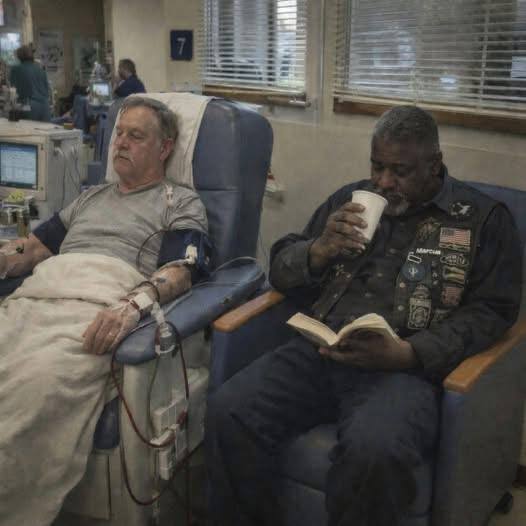
I learned the truth the day the transplant doctor said the words “directed donation.” Someone had chosen me—by name—to receive their kidney. It wasn’t my daughter, who had vanished into carpools and soccer schedules. It wasn’t my son, who couldn’t look up from his phone long enough to see me fading. It was Marcus, the man who had driven me, fed me, read to me, and waited beside my humming machine for four unbroken years. Only then did he confess: his exhausted drift across a yellow line had shattered my wife’s body, condemned her to the same dialysis chair, and eventually carried her to an early grave.
I expected hatred to rise up and devour me. Instead, I saw the man who had already spent years paying with his time, his sleep, his grief—and now, his own flesh. Forgiveness did not erase what happened; it transformed what could happen next. His kidney gave me back mornings without machines, afternoons with my returning daughter, evenings that belong to more than survival. We visit Jennifer’s grave together now, two men bound by a single terrible night and a long, stubborn mercy. He speaks to her; I listen. Somewhere between guilt and grace, we have built a family out of what was broken.